
The Complete Guide to Pregnancy Massage in New Zealand
The Complete Guide to Pregnancy Massage in New Zealand
Pregnancy is a time of significant physical and emotional change. As your body adapts to support a growing baby, muscles, joints, circulation and posture all shift. For many women, this brings discomfort — particularly in the lower back, hips, neck and legs.
Pregnancy massage (also known as prenatal massage) is a specialised form of therapeutic bodywork designed specifically for these changes. When delivered by a properly trained therapist, it can help reduce muscular tension, improve circulation and support overall comfort throughout each trimester.
This guide explains how pregnancy massage works, when it is appropriate, what safety considerations apply in New Zealand, and how to choose the right provider.
What Is Pregnancy Massage?
Pregnancy massage is a modified therapeutic massage tailored to the anatomical and physiological changes that occur during pregnancy. Unlike standard massage, it uses:
- Side-lying positioning with full pillow support
- Adjusted pressure to accommodate tissue sensitivity
- Avoidance of high-risk areas
- Structured techniques appropriate to each trimester
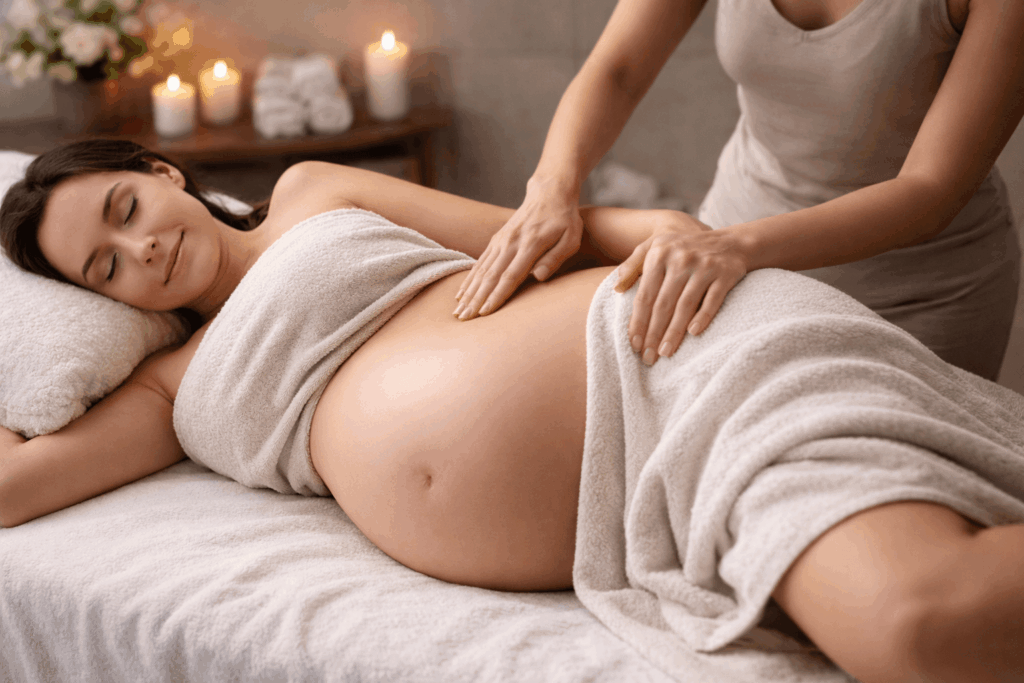
The aim is not deep tissue intensity, but functional support — easing muscle overload, reducing tension patterns and helping the nervous system settle.
If you’re specifically interested in trimester-specific benefits, see our detailed breakdown of pregnancy massage benefits by trimester.
Is Pregnancy Massage Safe?
For most healthy pregnancies, massage is considered safe when performed by a qualified therapist trained in prenatal care. Safety depends on:
- Thorough intake and health screening
- Appropriate positioning (never flat on the back after early pregnancy)
- Understanding contraindications
- Clear communication about symptoms
There are, however, situations where caution or medical clearance is required. These include high-risk pregnancies, pre-eclampsia, suspected blood clots, unexplained swelling or active infection.
For a detailed safety discussion, read Is pregnancy massage safe? and our guide on when to avoid pregnancy massage.
How the Body Changes During Pregnancy
Understanding why discomfort occurs helps explain how massage can help.
- Postural Changes: As the uterus expands, the centre of gravity shifts forward. This increases strain on the lumbar spine and sacroiliac joints.
- Hormonal Effects: Hormones such as relaxin soften ligaments, increasing joint mobility. While necessary for birth preparation, this can reduce stability and increase muscular compensation.
- Circulatory Changes: Blood volume increases significantly. Venous return from the legs may become less efficient, contributing to swelling.
- Muscular Compensation: Glutes, hip flexors, thoracic spine and neck muscles often work harder to stabilise the body.
These changes are normal — but they create predictable tension patterns.
Trimester-by-Trimester Considerations
First Trimester (Weeks 1–12)
Fatigue, nausea and hormonal shifts are common. Massage during this stage is typically gentle and shorter in duration. If you’re unsure about timing, see our article on first trimester massage guidance.
Second Trimester (Weeks 13–27)
Often called the “more comfortable” phase, this is when many women begin to experience back, hip and leg discomfort. Structured muscular support becomes more relevant.
Third Trimester (Weeks 28+)
Increased abdominal size and weight can intensify lower back strain, pelvic pressure and swelling. Positioning and circulation support become priorities.
Common Conditions Pregnancy Massage May Help With
- Lower back pain
- Sciatic-type symptoms
- Pelvic girdle discomfort
- Neck and shoulder tension
- Leg cramps
- Mild swelling
- Sleep disturbances related to muscular discomfort
If back pain is your main concern, read more about pregnancy back pain relief with massage.
For swelling and circulation support, see pregnancy swelling and circulation support.
What to Expect at a Pregnancy Massage Appointment
A professional pregnancy massage appointment should include:
- Detailed health history and symptom discussion
- Clear communication about comfort levels
- Side-lying supported positioning
- Moderate, controlled pressure
- Post-session guidance if needed
To reduce uncertainty before booking, review what to expect during a pregnancy massage appointment.
Choosing a Qualified Pregnancy Massage Therapist in NZ
When selecting a provider, look for
- Specific prenatal massage training
- Clear health screening protocols
- Experience working with pregnancy-related conditions
- Willingness to refer if medical concerns arise
Clinical precision and safety awareness matter more than intensity.
When to Seek Medical Advice First
Consult your GP, midwife or obstetric provider before massage if you experience:
- Sudden severe swelling
- Persistent headaches with visual disturbance
- Experience working with pregnancy-related conditions
- Signs of infection or fever
- Calf pain with redness or warmth
- Any pregnancy classified as high-risk
Massage should complement medical care — not replace it.
Professional Pregnancy Massage in Auckland
If you are looking for structured, safety-informed and clinically guided professional pregnancy massage in Auckland, choosing a therapist experienced in prenatal care ensures both comfort and confidence.
Every pregnancy is different. A tailored approach ensures your treatment reflects your trimester, symptoms and overall health status.
Ancient wisdom. Modern Care
Frequently Asked Questions
Can I have a massage in early pregnancy?
In most uncomplicated pregnancies, yes — with appropriate modifications. Always inform your therapist of your stage.
Is side-lying positioning safe?
Yes. Side-lying is the recommended position after the first trimester to avoid pressure on major blood vessels
Can massage induce labour?
There is no strong evidence that therapeutic massage induces labour in a healthy pregnancy.
How often can I have pregnancy massage?
This depends on symptoms. Some women attend monthly, others fortnightly in later stages.
Does pregnancy massage help swelling?
Gentle techniques may assist circulation in mild, uncomplicated swelling
Should I avoid deep pressure?
Firm pressure can be used in some areas, but techniques are adapted for safety and comfort.
Further Reading
Tags :
Refine - Body
Post Related
Unveil Your Most Beautiful Self.
Refine
Body
Face

Services
Follow us on :
Copyright © 2025 Interactive Therapies (2025) Ltd | Powered by Business Squad