
trusted by clients since 1993
Pregnancy Massage by Trimester Guide in NZ
Pregnancy Massage by Trimester Guide in NZ
Pregnancy changes the body in stages, so massage should change with it. What feels helpful in the first trimester may be very different from what is needed in the second or third. A well-structured pregnancy massage is not a standard relaxation session with a new label. It is a treatment approach that adjusts to body changes, comfort needs, positioning requirements and clinical safety considerations as pregnancy progresses.
This guide explains how pregnancy massage can be adapted by trimester, what people commonly seek support for at each stage, how positioning changes, and why proper screening matters. It is designed to help you understand what appropriate care looks like in plain, practical language.
If you are looking for a session tailored to your stage of pregnancy, you can also explore pregnancy massage benefits by trimester.
Why Pregnancy Massage Should Change by Trimester
Pregnancy is not one fixed physical state. Hormones, circulation, posture, joint loading, breathing mechanics and sleep comfort all shift as the body adapts. Because of that, pregnancy massage should never be treated as a one-style-fits-all service.
In early pregnancy, people may be dealing with nausea, fatigue and heightened sensitivity. In the middle months, the back, hips and rib cage often begin taking more load. Later in pregnancy, swelling, pelvic pressure, leg fatigue and side-lying comfort can become more important than deeper tissue work.
- That is why a trimester-aware approach usually includes:
- Screening for current symptoms and red flags
- Adjusting pressure and treatment goals
- Choosing appropriate supported positioning
- Focusing on the areas most affected at that stage
- Keeping the session practical, calm and well tolerated
First Trimester Massage: What Changes Early in Pregnancy
The first trimester is often the stage where people feel most uncertain about massage. Energy may be low, nausea can be unpredictable, and the body may feel more reactive than usual. Some people still feel physically well and simply want a gentle session for neck, shoulders or stress-related tension. Others would rather wait until symptoms settle.
In early pregnancy, massage should usually be conservative and individualised. It may involve shorter sessions, gentler pressure, more communication about comfort, and a stronger focus on relaxation and general body ease rather than intense tissue work.
Massage in the first trimester is not about trying to control pregnancy outcomes. It is about supporting comfort where appropriate.
Second Trimester Massage: Support for Back, Hips and Sleep
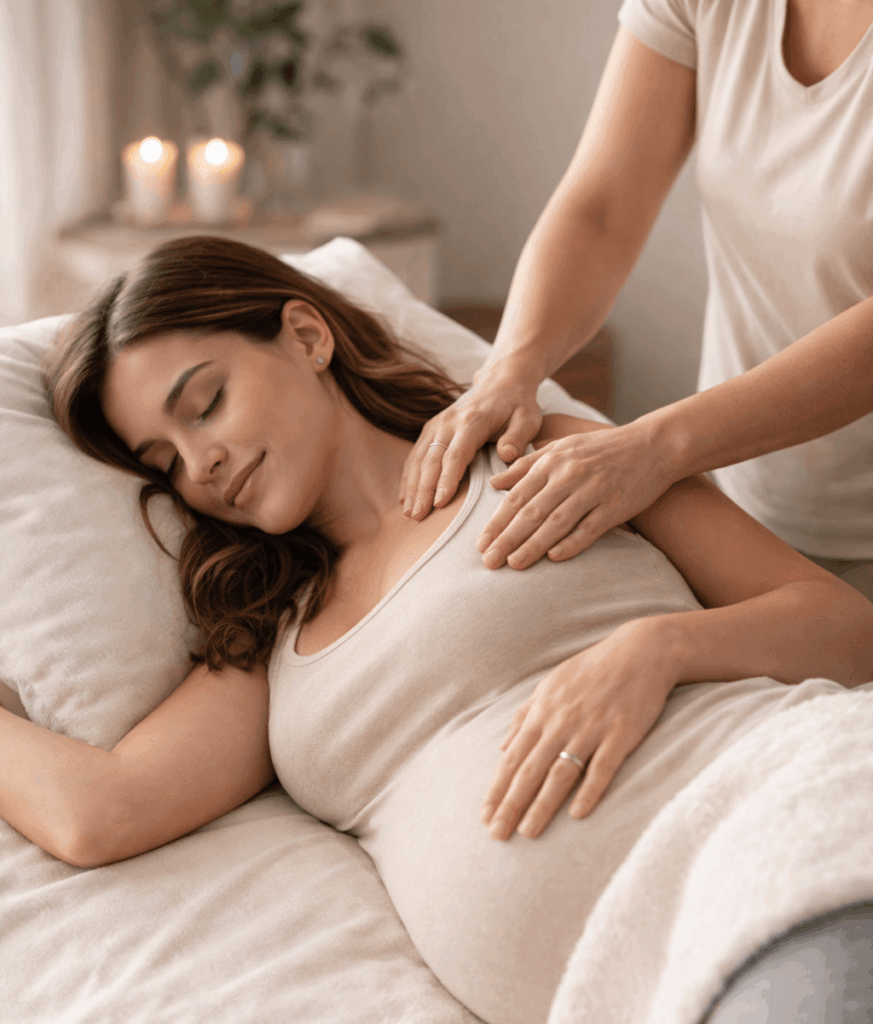
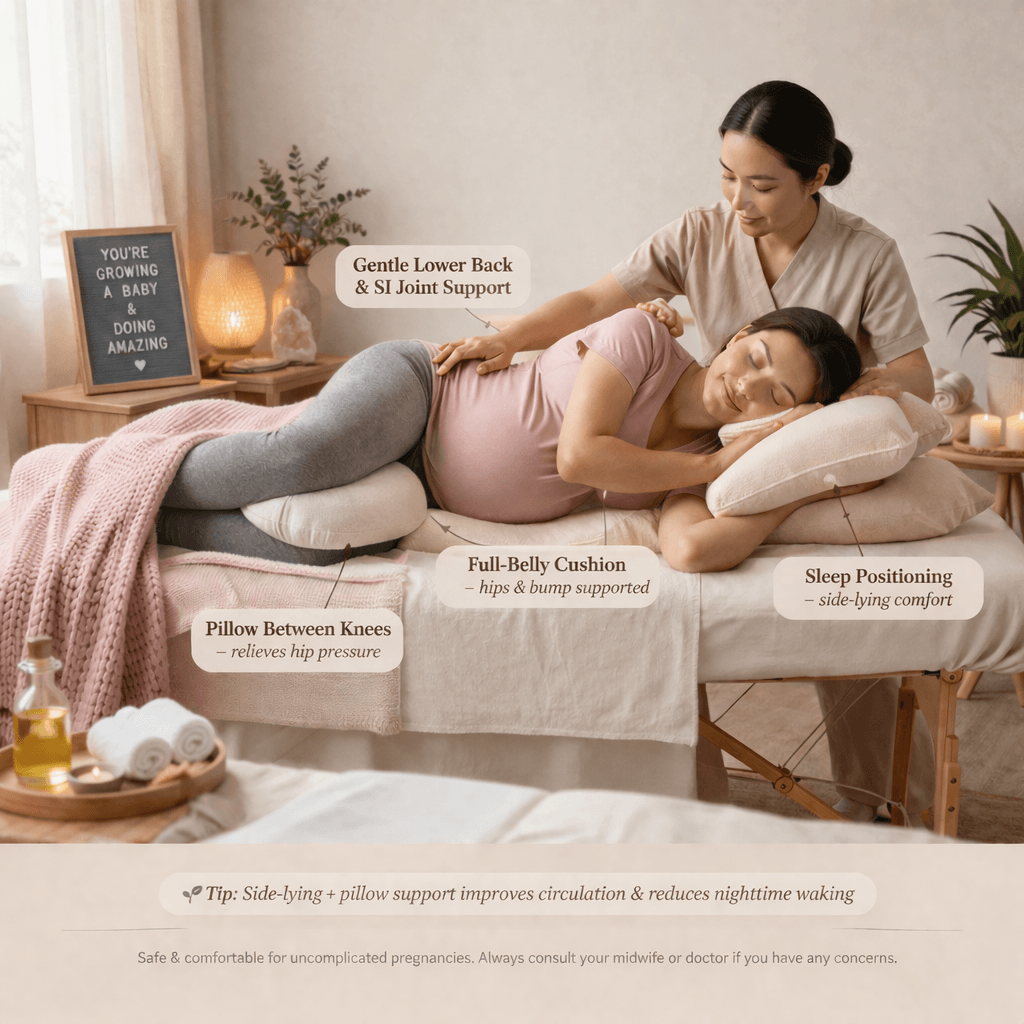
The second trimester is often when pregnancy massage becomes especially useful for musculoskeletal support. As the abdomen grows and posture changes, the lower back, glutes, hips and thoracic spine often begin carrying more physical load. Sleep can also become less comfortable, especially when side-lying starts to feel more demanding.
- That is why a trimester-aware approach usually includes:
- Easing low back tension
- Reducing hip and glute tightness
- Supporting upper back and shoulder comfort
- Helping the body settle for better rest
- Reducing the sense of physical heaviness through the legs
Third Trimester Massage: Comfort, Swelling and Pelvic Load
By the third trimester, many clients are looking less for general relaxation and more for practical comfort. The body may feel heavier, the pelvis more loaded, the legs more tired, and swelling more noticeable. Even turning in bed or resting on one side can become harder.
At this stage, good massage is often about reducing muscular strain, helping the body feel less overloaded, and creating a treatment setup that is easy to tolerate. Sessions may move more slowly, use more bolsters and focus on relieving back, glute, hip and leg discomfort without pushing the body too hard.
How Positioning Changes Across Pregnancy
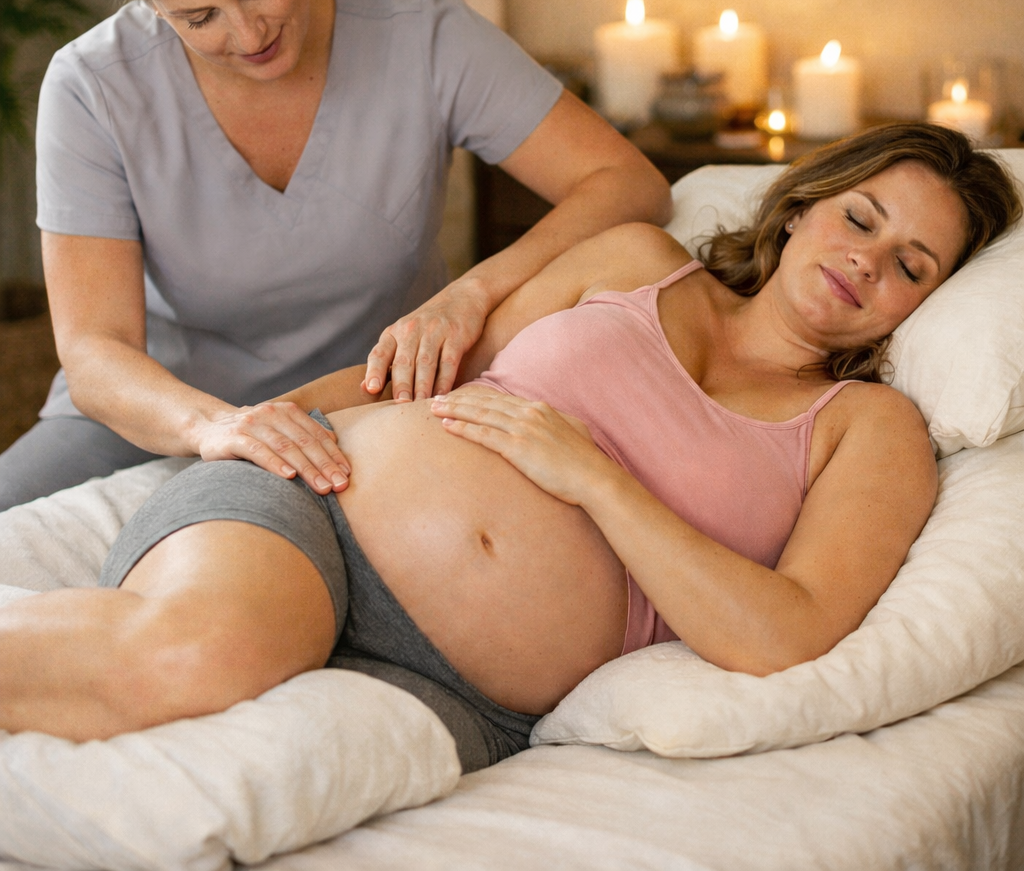
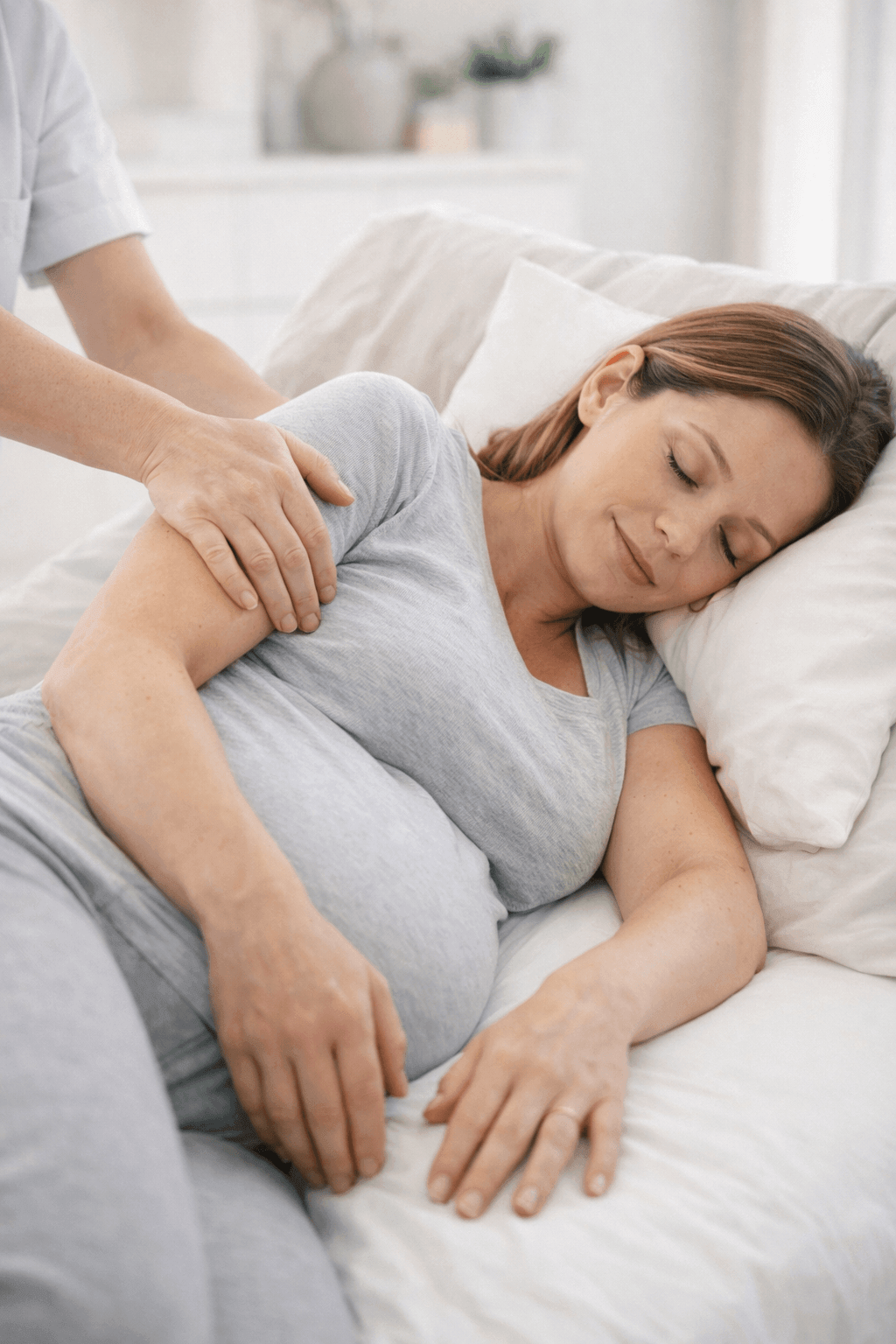
Positioning is one of the most important parts of pregnancy massage. A technically skilled treatment will still feel poor if the client is unsupported, awkward or bracing the whole time. That is why setup should change as pregnancy progresses.
Early in pregnancy, some clients may still tolerate a wider range of positions, although extra support may still be helpful. In the second and third trimester, supported side-lying often becomes the most practical option. Pillows or bolsters may be placed under the head, between the knees, behind the back, under the upper arm and around the abdomen depending on what feels best.
The aim is not only safety. It is comfort, breathing ease and enough support for the muscles to actually let go. For a full explanation, read pregnancy massage positioning by trimester.
Why Safety Screening Matters More Than Generic Rules
Pregnancy massage should not rely on myths or blanket statements alone. What matters most is current clinical context. Two people at the same gestation may need very different treatment decisions depending on symptoms, comfort, swelling patterns, recent appointments and overall pregnancy course.
A good therapist should ask relevant questions before treatment begins. That may include how many weeks pregnant you are, how you are feeling today, whether there have been recent changes, whether swelling is routine or unusual, and whether there are any symptoms that should be medically reviewed first.
Massage may need to be modified, delayed or referred on if there are concerns such as bleeding, severe pain, fever, unusual swelling, headache with other symptoms, dizziness that does not settle, or any new symptom that has not yet been assessed. Read more in when to avoid pregnancy massage.
Common Benefits of Pregnancy Massage by Trimester
Pregnancy massage should be described carefully. It is not a cure-all, and it should not be presented as making medical promises. What it can often do is reduce muscular overload, improve physical comfort and make daily movement or rest feel more manageable.
- First trimester: gentle support for stress-related tension, neck and shoulder tightness, and general body comfort
- Second trimester: targeted support for back pain, hip strain, glute tension and sleep-related discomfort
- Third trimester: comfort-focused support for heavy legs, swelling-related tightness, low back fatigue and pelvic load
For many people, one of the biggest benefits is simply feeling that their changing body is being supported in a skilled, calm and responsive way.
How Often Pregnancy Massage may be Helpful
There is no single ideal schedule. Some clients come occasionally for comfort and body maintenance. Others benefit from more regular support during periods of stronger discomfort or disrupted sleep. The right rhythm depends on symptoms, trimester, tolerance and how quickly tension returns.
In practical terms, massage frequency should fit what the body is dealing with now, not follow a rigid formula. If you want a fuller explanation, visit how often to get pregnancy massage.
What to Expect from a Pregnancy Massage Session
A structured pregnancy massage session should begin with conversation, not assumptions. A therapist should ask about your stage of pregnancy, current symptoms, comfort in different positions and any concerns that may affect treatment.
From there, the session may include:
- Supported side-lying or modified positioning
- Comfortable, controlled pressure
- Focused work to the back, hips, glutes, shoulders and legs where appropriate
- Ongoing comfort checks during the session
- A calm pace with practical adjustments as needed
Strong, aggressive or highly uncomfortable work is not the goal. Pregnancy massage works best when it is clinically aware, comfortable and matched to what your body can tolerate well.
Choosing the Right Support for Your Stage
Understanding pregnancy massage by trimester helps you choose care that makes sense for your body now. Whether you are in early pregnancy and want a gentle session, in the second trimester with growing back and hip discomfort, or in the final weeks needing supported comfort, the treatment should fit the stage you are in.
If you are ready to explore trimester-specific hands-on support, visit book a pregnancy massage tailored to your trimester.
Commonly Asked Questions
Is pregnancy massage the same in every trimester?
No. Positioning, pressure, goals and treatment focus should change as the body changes through pregnancy.
Can massage help with pregnancy back and hip discomfort?
It may help reduce muscular tension and improve comfort, especially when treatment is tailored to the stage of pregnancy and the areas carrying more load.
Why is side-lying used so often?
Supported side-lying is often one of the most practical and comfortable ways to position a pregnant client, especially later in pregnancy.
Does pregnancy massage help with swelling?
It may help some people feel less heavy or tight, but swelling should always be screened carefully because not all swelling is routine.
How often should I get pregnancy massage?
That depends on your symptoms, trimester, tolerance and goals. Some people book occasionally, while others benefit from more regular support.
Do I need screening before treatment?
Yes. Pregnancy massage should always begin with relevant screening and clear communication.
Further Reading
Safe, soothing touch for you and your little one
Tags :
Refine - Body
Post Related
Unveil Your Most Beautiful Self.
Refine
Body
Face

Services
Follow us on :
Copyright © 2025 Interactive Therapies (2025) Ltd | Powered by Business Squad